
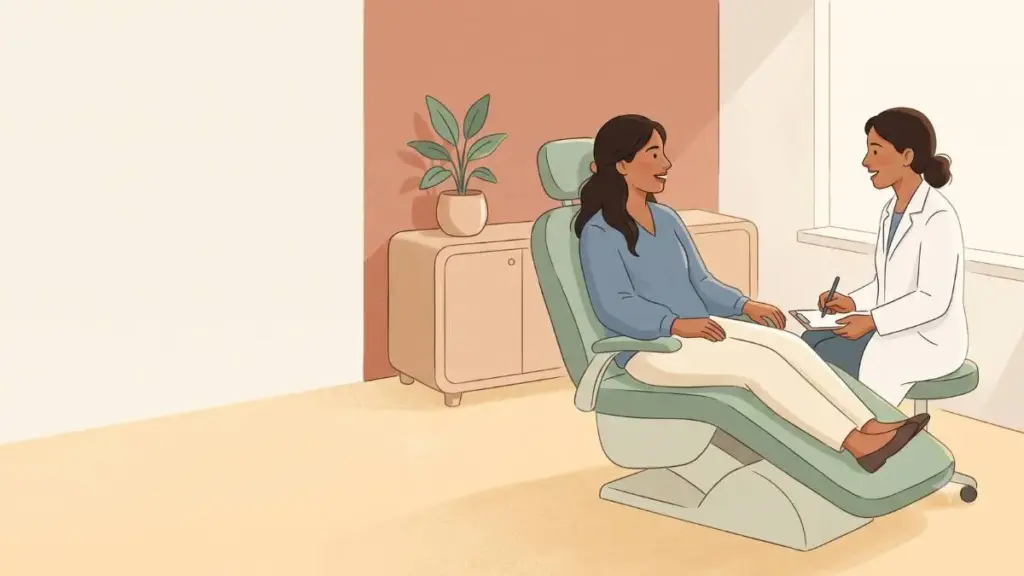
Short answer: Tell your dentist you’re anxious at the moment you book — not when you’re already in the chair. One sentence is enough: “I get very anxious at the dentist, so please explain everything before you do it.” A good clinic will slow down, book you a longer slot, and agree a stop signal with you. Below are word-for-word scripts you can send on WhatsApp, say at reception, or read out from your phone once you sit down.
Most people who are frightened of dental treatment never say so out loud. They sit down, grip the armrests, answer “fine” when asked how they’re doing, and leave promising to come back — and then don’t, sometimes for years.
The frustrating part is that saying it takes about four seconds and changes almost everything about how the appointment runs. Dentists are not surprised by nervous patients. Nervous patients are a large share of everyone who walks through the door. What they cannot do is respond to fear they haven’t been told about.
Why saying it out loud actually changes the appointment
This isn’t about sympathy. Telling the clinic changes concrete, practical things:
- You get more time. Reception can block a longer slot so nobody is rushing you, and so the dentist isn’t watching the clock while you steady yourself.
- You get told before, not during. Most dental fear is fear of surprise. Once the dentist knows, they narrate: “Next you’ll hear a whirring sound, you’ll feel water, nothing sharp.”
- You get a stop signal. Raising your left hand means everything pauses. Having a working brake is often what makes the whole thing bearable.
- The plan gets split up. A treatment that would have been one long visit can often be broken into two or three shorter ones.
- It goes on your file. You say it once. Every future visit, the whole team already knows.
- Other options come on the table. Numbing gel before the injection, sedation options, or a “checkup only, no treatment today” first visit — these usually get offered only if the dentist knows you need them.
The scripts
Pick whichever fits. You can copy these into WhatsApp exactly as written, or keep this page open on your phone and read the line out.
1. When you book (the most useful moment)
“Hello, I’d like to book an appointment. I should mention I’m very anxious about dental treatment and it’s been a long time since my last visit. Could you book me a slightly longer slot, and let the doctor know beforehand?”
Shorter WhatsApp version:
“Hi, I’d like an appointment. I’m a nervous patient — please can you tell the doctor in advance? Thank you.”
2. If you want a first visit with no treatment
Many people avoid booking because they’re afraid of what will happen the same day. You are allowed to ask for a look-and-talk visit only.
“For this first appointment, I’d like just an examination and a discussion of what’s needed — no treatment today, please. I’ll book the treatment separately once I know the plan.”
3. At reception, on the day
“I mentioned on the phone that I’m quite nervous — just checking the doctor knows.”
4. The first thing to say once you sit down
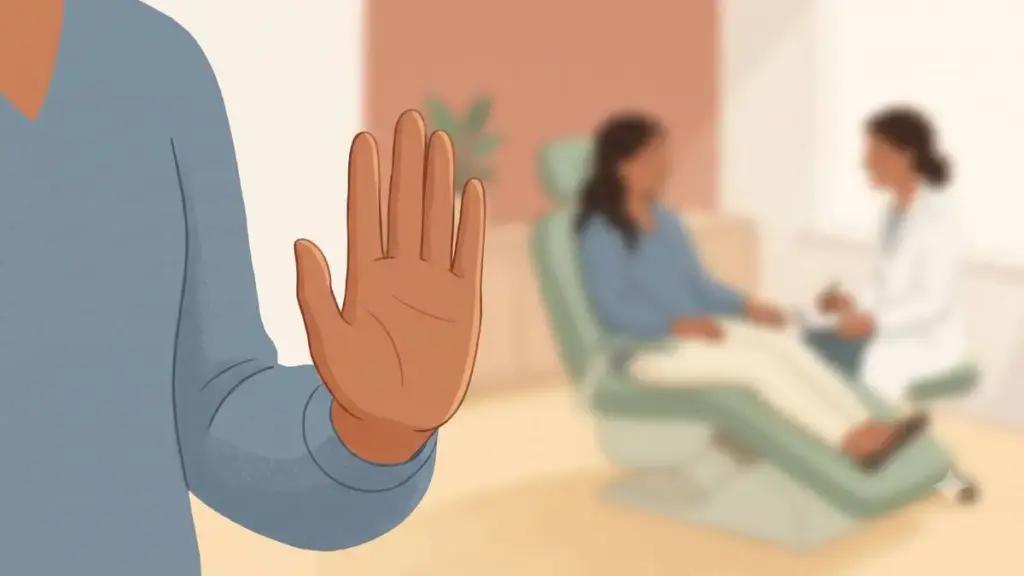
“Before we start, I want to say I’m anxious about this. It helps me a lot if you tell me what you’re about to do before you do it. And can we agree that if I raise my left hand, you’ll stop?”
That last part is the single most valuable sentence in this article. Agreeing a stop signal turns the appointment from something happening to you into something you have a say in.
5. Naming the specific fear
“I’m scared of the dentist” is useful. Naming the exact thing is far more useful, because each one has a different practical fix.
| What you’re afraid of | What to say |
|---|---|
| Injections / needles | “Needles are my biggest fear. Can you use numbing gel first and warn me before the injection?” |
| Pain | “I’m worried about pain. Please check I’m fully numb before starting, and I’ll raise my hand if I feel anything.” |
| The drill sound | “The sound is what gets to me. Is it alright if I wear earphones?” |
| Gagging | “I have a strong gag reflex, especially with X-rays and impressions. Can we go slowly?” |
| Feeling trapped / can’t breathe | “I feel panicky lying back with my mouth open. Can we take a break every few minutes so I can sit up?” |
| Being judged | “I know my teeth are in bad shape and I’m embarrassed. Please just tell me what we can do from here.” |
| The bill | “Before anything starts, can I have the full cost in writing, and can we do it in stages if needed?” |
| Losing control | “I’d like you to explain each step before it happens, even if it slows things down.” |
6. Mid-treatment, when you need it to stop
You can’t talk with instruments in your mouth, which is exactly why the hand signal is agreed in advance. Once you’re paused:
- “I need a minute.”
- “I can still feel that — can I have more anaesthetic?”
- “Can I sit up for a moment?”
- “How much longer?”
- “I’d like to stop here and finish another day.”
That last one is allowed. Stopping a procedure partway is not ideal and the dentist will explain any risk of leaving it incomplete — but it is your mouth and your decision.
If it’s been years since your last visit
This is the fear that keeps people away longest — not the treatment, but the imagined lecture about how long they’ve left it.
“I haven’t been to a dentist in about [X] years because I’ve been anxious about it. I know that’s a long time. I’d rather not be told off — I’d just like to know where things stand and what to do first.”
Practising dentists see long gaps constantly. Someone returning after a decade is a normal Tuesday, not a scandal.
Speaking up for someone else
If you’re bringing a child, an elderly parent, or someone who finds it hard to speak for themselves, say it at the door:
“She’s very frightened of dental visits. Please explain things directly to her, and let her know she can raise her hand to stop at any time.”
For children specifically, one widely repeated piece of advice from paediatric dentists is to avoid promising “it won’t hurt” — if anything does feel uncomfortable, the child learns that adults’ reassurance can’t be trusted. “The doctor is going to count your teeth” holds up better.
What a good response sounds like
You’ll know within about a minute whether you’ve found the right clinic. Encouraging signs:
- They ask what specifically worries you, rather than just saying “don’t worry.”
- They agree to the stop signal without hesitating.
- They explain what they’re doing as they go.
- They offer to split treatment across visits.
- They give costs upfront, in writing, unprompted.
Less encouraging: being laughed at or called a baby, being pushed into same-day treatment you hadn’t agreed to, having the hand signal ignored, or getting a vague verbal estimate that grows by the end. None of that is something you have to accept. Changing clinics is completely reasonable, and it is not rude.
Small things that help on the day
- Take the first appointment of the morning — less waiting-room time to build dread.
- Bring earphones and something loud enough to cover the sound.
- Bring a person. Most clinics allow someone to sit with you if you ask.
- Skip the strong coffee beforehand — it can make the shaky feeling worse.
- Eat something first, especially for a longer appointment.
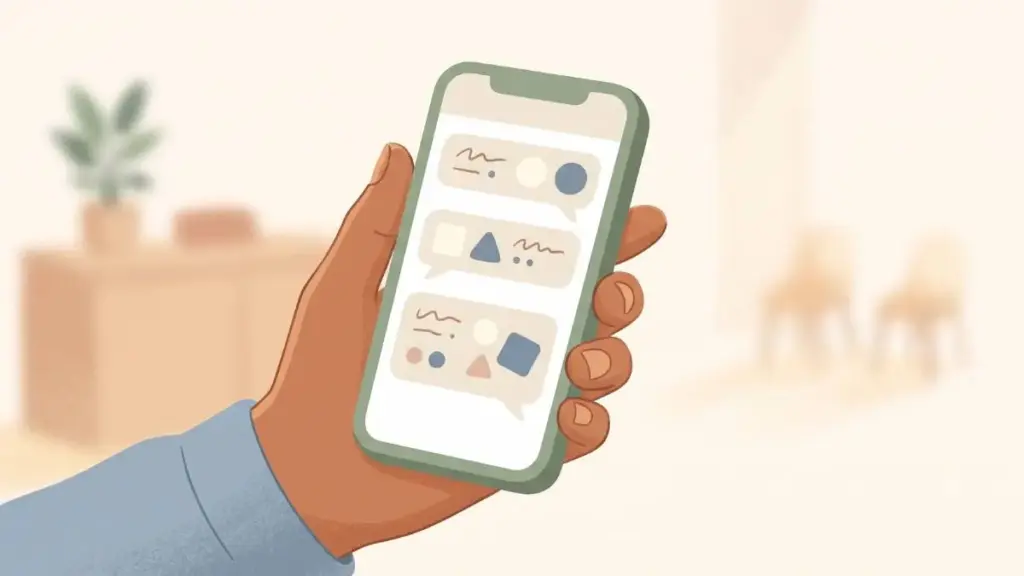
- Write your fears in a note on your phone and hand the phone over if you can’t say it aloud. This works, and receptionists have seen it before.
Frequently asked questions
Will the dentist think I’m being dramatic?
Dental anxiety is one of the most common reasons people delay treatment, and clinics deal with it routinely. Telling them makes their job easier, not harder — an informed dentist can pace the appointment properly instead of guessing why you’ve gone rigid.
Is a hand signal a real thing or just something patients ask for?
It’s a standard, widely used arrangement. Raising your left hand pauses the procedure. Agree it before treatment starts so there’s no ambiguity once instruments are in your mouth.
Can I ask for an examination only, with no treatment on the first visit?
Yes. Ask for it when booking and repeat it when you sit down. A first visit that is only an examination, X-rays if needed, and a discussion of the plan is a perfectly normal request — and for many anxious patients it’s the step that makes returning possible.
What if I’m too embarrassed to say any of this out loud?
Send it in writing. A WhatsApp message when booking, or a note typed on your phone and handed to the receptionist, does the same job. Nothing requires you to say it face to face.
What if I told them and they ignored it?
Say it once more clearly, and if it’s ignored again, find a different clinic. A dentist who won’t honour an agreed stop signal is not someone you should be doing longer treatments with.
Are there options beyond talking it through?
Yes — topical numbing gel before injections, nitrous oxide, oral sedation and other approaches exist, and availability varies from clinic to clinic. Whether any of them suits you depends on your medical history and the treatment planned, so that’s a conversation to have with a registered dentist rather than a decision to make in advance.
Find a clinic before you need one urgently
The hardest appointment to make is the one booked in pain, in a hurry, at whichever clinic answers the phone. Choosing calmly — reading how a practice describes itself, checking that a dentist is registered, picking somewhere you can reach easily — takes most of the pressure out of the first visit.
About this article. This is a patient communication guide written by the IndiaDental editorial team with AI assistance. It is not written by a dental professional and contains no diagnosis, treatment advice or clinical recommendations — it covers only how to talk to a clinic about anxiety. Anything relating to your symptoms, your treatment options or your suitability for sedation should be discussed with a registered dental practitioner who has examined you.
Are you a practising dentist? We’re happy to publish a professional review note on this page with your name, qualification and clinic link. Get in touch.
