

Short answer: A first dental visit is mostly talking. You’ll fill in a short medical history, discuss what brought you in, and the dentist will look at your teeth and gums with a small mirror and probe — usually five to ten minutes. X-rays may be taken. Then you’ll sit up and discuss what, if anything, needs doing, and what it will cost. Most first visits involve no treatment at all. Budget about 30 to 45 minutes.
The reason first visits feel frightening is almost never the visit itself. It’s the blank space where the information should be — not knowing how long it takes, whether something will be drilled, whether you’ll be handed a bill you weren’t expecting, or whether you’ll be lectured about the years since you last went.
So here is the whole thing, start to finish.
Before you go
Very little preparation is needed, but four things make the appointment go better:
- A list of any medicines you take, including supplements. Photograph the strips on your phone if that’s easier than writing them down. This matters — several common medications affect dental treatment and anaesthesia.
- Any past dental records or X-rays, if you have them from another clinic.
- Your insurance or corporate scheme details, if you have cover.
- A note on your phone of what’s been bothering you, and any questions. It’s easy to forget both once you’re in the chair.
Brush normally before you go. You don’t need to do anything special, and dentists are not judging your brushing on the day — they’re looking at years of history, not this morning.
If you’re nervous, this is also the moment to say so. A short message when booking changes how the whole appointment is run — here are the exact words to use.
What happens, step by step
1. Reception and paperwork (5 minutes)
You’ll fill in a form covering your name and contact details, your medical history, medications, allergies, and any ongoing conditions such as diabetes, blood pressure or heart problems. Some clinics do this on a tablet, some on paper, some verbally.
Answer the medical section fully even where it seems unrelated to teeth. Blood thinners, diabetes medication, bisphosphonates, pregnancy and heart conditions all genuinely change how a dentist plans treatment.
2. The conversation (5–10 minutes)
Before anything goes near your mouth, the dentist will ask why you’ve come. Whether something hurts. How long it’s been going on. When you last saw a dentist. Whether you smoke. What you’re hoping to get sorted.
This part is more useful than people expect, and it’s where you should mention anything you’re worried about — including cost, including anxiety, including embarrassment. Say it here and the rest of the visit adapts around it.

3. The examination (5–10 minutes)
You’ll recline in the chair. The dentist uses two instruments: a small angled mirror, and a thin metal probe with a hooked end. They work around your mouth tooth by tooth, often calling out numbers and codes to an assistant — that’s a standard charting shorthand, not a verdict.
They’re checking for decay, cracks, existing fillings, gum condition, how your bite meets, and the soft tissues of your mouth and tongue. Nothing here is painful. The probe may feel cold, and if a tooth is already sensitive you may feel a brief twinge when it’s touched — say so if you do, because that itself is useful information.
Your mouth stays open for a few minutes at a stretch. If that feels like too long, raise your hand and they’ll pause.
4. X-rays, if needed (5 minutes)
Not every first visit includes X-rays, but many do, because decay between teeth and problems below the gum line aren’t visible to the eye.
Two types are common. A small sensor placed inside your mouth captures one or two teeth — you bite gently and hold still for a second or two. Or you stand at a machine that rotates around your head to capture the whole jaw, which takes about fifteen seconds and involves nothing entering your mouth.
The in-mouth sensor is the one that bothers people with a strong gag reflex. Say so beforehand — there are ways to make it easier, and the rotating machine is often an alternative. If you are or might be pregnant, tell the clinic before any X-ray is taken.
5. A cleaning, sometimes
Some clinics include a scaling and polish in the first visit; many book it separately. If it happens, expect a small vibrating tip and a water spray, a slightly odd buzzing sensation, and a gritty polish afterwards. It’s noisy rather than painful, though it can be uncomfortable if your gums are inflamed.
You can decline it on the day and book it for another time. That’s a normal request.
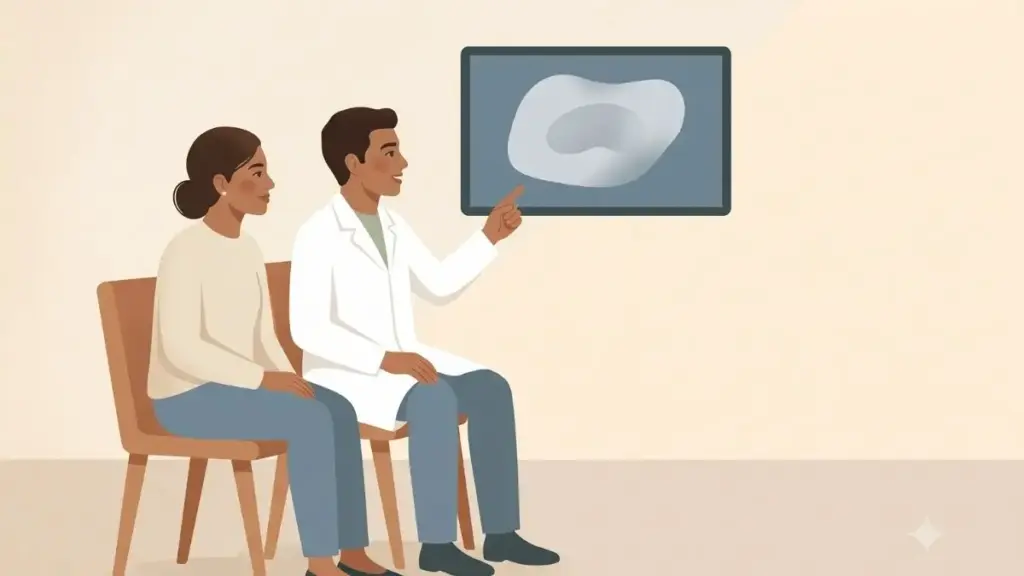
6. The discussion (10 minutes)
You sit up and the dentist explains what they found. Good clinics show you — on the X-ray, on a screen, or with a small intraoral camera — rather than just describing it.
You should leave knowing four things:
- What the current state of your teeth and gums is
- What needs doing, and in what order of urgency
- What each item costs
- What happens if you delay
Ask for the costs in writing. Any established clinic will produce a printed or emailed treatment plan without hesitating, and a verbal-only estimate that keeps growing later is one of the clearest warning signs there is.
Will they treat something on the first day?
Usually not, unless you’re in pain and something urgent is found — an abscess or acute infection may be dealt with immediately, because waiting makes it worse.
Otherwise the standard pattern is: examine, plan, book. If you’d rather guarantee that nothing happens on day one, say so when you book. “Examination and discussion only, please — I’ll book treatment separately” is a completely normal request and a reasonable way to make the first visit easier to face.
Will it hurt?
A routine examination shouldn’t. The instruments are for looking, not cutting, and the mirror and probe don’t break anything.
What people do feel: cold metal, pressure, brief sensitivity on a tooth that was already sensitive, and mild discomfort during scaling if gums are inflamed and bleed easily. No injections are given for an examination.
How much does a first visit cost?
Consultation charges vary widely across India — by city, by whether the clinic is a single practice or part of a chain, and by whether a specialist or a general dentist sees you. Many clinics charge a modest consultation fee and some waive it if you go ahead with treatment.
Three things worth asking on the phone before you book, so there are no surprises:
- What’s the consultation fee?
- Are X-rays charged separately?
- Is a cleaning included or billed on its own?
If it’s been years since your last visit
Then you’re in the majority, and the appointment doesn’t change much. The examination is the same. What tends to differ is that there’s more to discuss afterwards, and the plan gets staged over several visits with the urgent items first.
Practising dentists see long gaps constantly. Someone returning after ten or fifteen years is an ordinary weekday, not a scandal, and a clinic that makes you feel otherwise is telling you something useful about itself.
Questions worth asking before you leave
- Which of these needs doing now, and which can wait?
- What happens if I leave it six months?
- Is there a cheaper option that’s still sound?
- How many visits will the whole plan take?
- Can I have the treatment plan and costs in writing?
- Who will actually be doing the treatment?
That third question is the one people are most reluctant to ask and the one that most often saves money. There is frequently more than one clinically acceptable option at different price points, and dentists generally present the best one rather than the cheapest unless asked.
Afterwards
You walk out. There’s no recovery, nothing to avoid, no restriction on eating — unless you had a scaling, after which some people find their teeth briefly sensitive to cold for a day or so.
If nothing needs treatment, you’ll be told when to come back — typically every six to twelve months, though it depends on your particular situation.
Frequently asked questions
How long does a first dental visit take?
Usually 30 to 45 minutes in total: about 5 minutes of paperwork, 5 to 10 minutes of conversation, 5 to 10 minutes of examination, X-rays if needed, and roughly 10 minutes discussing what was found. Allow an hour if it’s been many years since your last visit.
Do I need X-rays on the first visit?
Not always, but they’re common, because decay between teeth and problems below the gum line can’t be seen by eye. Whether you need them depends on your symptoms and history, and the dentist should explain why they’re recommending them. Tell the clinic beforehand if you are or might be pregnant.
Will the dentist do treatment on the first visit?
Usually not. The standard pattern is examine, plan, then book treatment separately — unless you’re in pain and something urgent is found. If you want to be certain, ask for examination and discussion only when you book.
Does a dental examination hurt?
A routine examination shouldn’t. The mirror and probe are for looking, not cutting, and no injection is given. You may feel cold metal, light pressure, or a brief twinge on a tooth that was already sensitive.
What should I bring to a first dental appointment?
A list of your current medications, any past dental records or X-rays, your insurance details if you have cover, and a note of your questions. Photographing your medicine strips on your phone is the easiest way to handle the first one.
Will the dentist tell me off for not coming sooner?
They shouldn’t, and most won’t. Long gaps are extremely common. If you’re worried about it, say so at the start of the appointment — and if a clinic does make you feel judged, that’s worth factoring into whether you go back.
Booking the first one
The easiest appointment to face is one you chose calmly rather than one booked in pain at whichever clinic answered the phone. If nerves are the thing holding you back rather than logistics, the scripts in our guide to telling your dentist you’re anxious cover exactly what to say when you call.
About this article. This is a general description of what a routine first dental appointment involves, written with AI assistance. It contains no diagnosis, treatment advice or clinical recommendations. Procedures vary between clinics, and anything relating to your own teeth, symptoms, medications or treatment options should be discussed with a registered dental practitioner who has examined you.
Are you a practising dentist? We’re happy to publish a professional review note on this page with your name, qualification and clinic link. Get in touch.
